
Tablecloth - Uruapan Gold
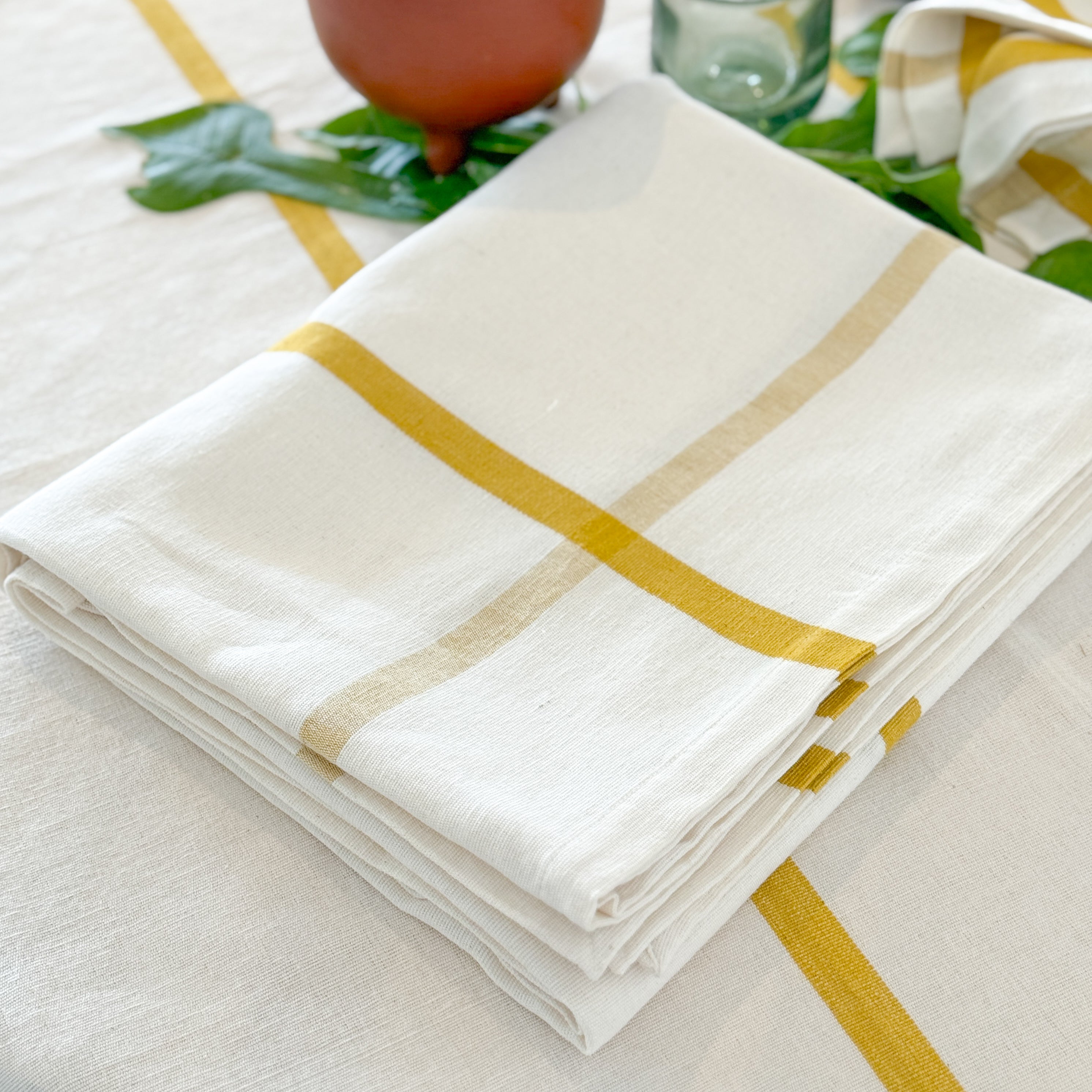
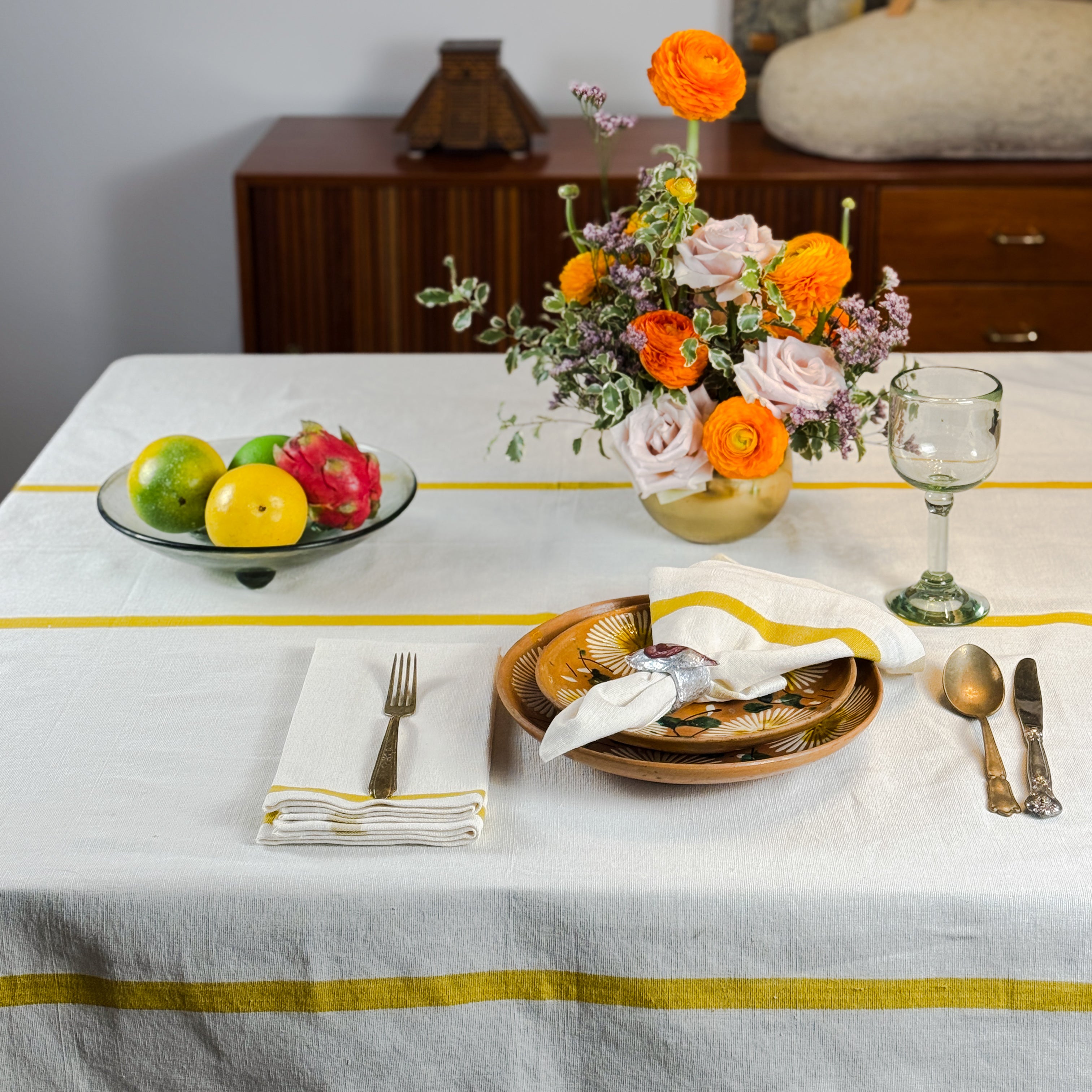
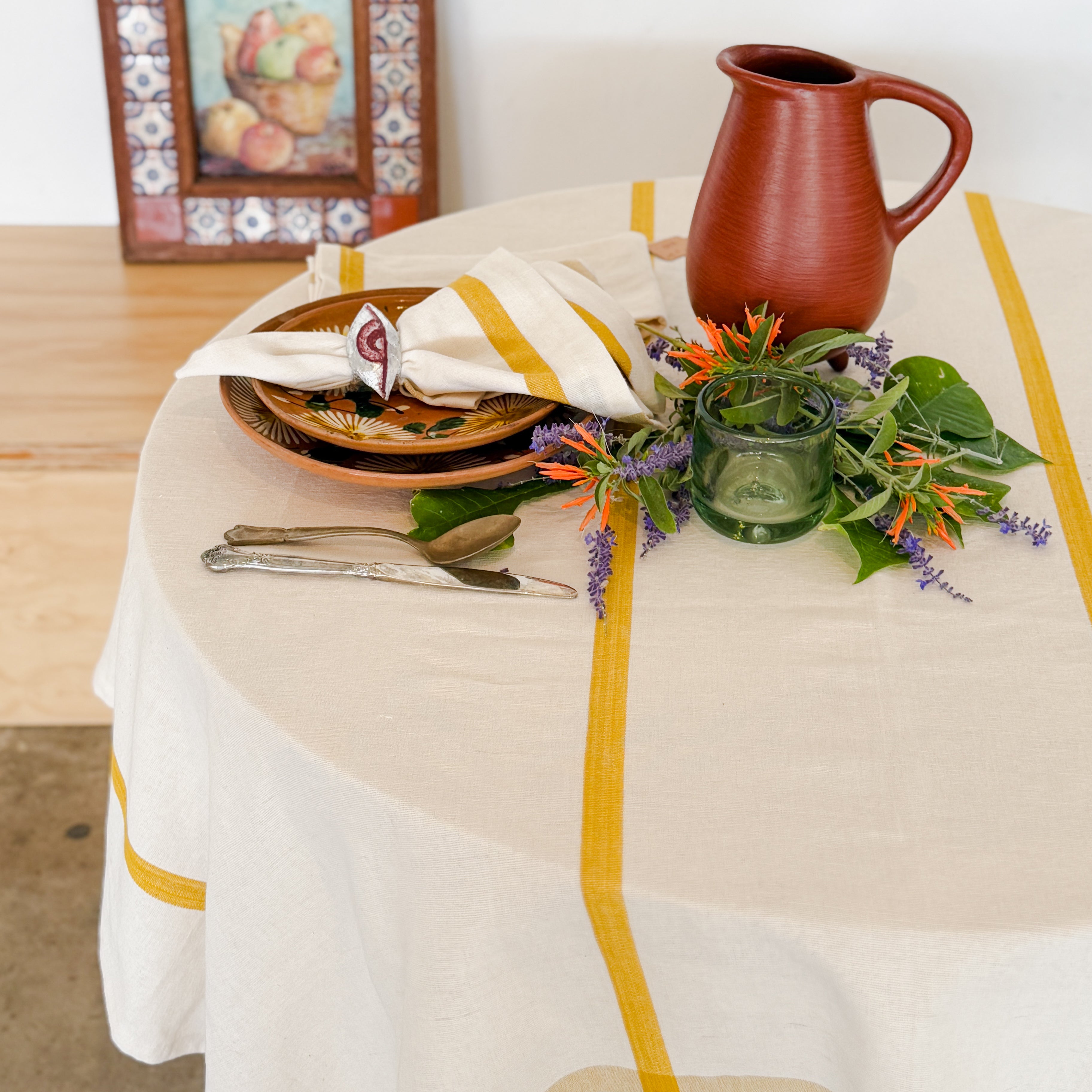
A cotton tablecloth woven by Telares Uruapan in Uruapan, Michoacán in the Uruapan Gold colorway — a warm, luminous tone that reflects the workshop’s long tradition of working with color and natural fiber. The even weave and clean finish make this tablecloth as functional as it is considered. Available in multiple sizes.
Dimensions
About Telares Uruapan
Founded in the 1950s by Walter and Bundy Illsley in Uruapan, Michoacán, Telares Uruapan occupies a singular place in the history of Mexican design. The workshop became internationally known through its collaboration with Alexander Girard, producing the iconic Mexidot and Mexicotton textiles and helping introduce Mexican weaving to a broader design audience through projects associated with Herman Miller and Knoll. During those years, Charles and Ray Eames were among the many designers who visited the workshop, drawn by its extraordinary combination of craft, color, and innovation. Raul Cabra, creative director and founder of La Embajada, has worked closely with Susana and Rewi Illsley — who continue to lead the workshop today — for many years, visiting them regularly in Uruapan and incorporating their textiles into projects including Casa Dragones, Pujol, Auberge Resorts, and numerous private residences throughout Mexico and the United States. Every textile reflects more than half a century of weaving knowledge, design experimentation, and family stewardship — woven by one of Mexico’s most important textile workshops and a family La Embajada is proud to call friends.
About the Pedal Loom Tradition of Michoacán
The pedal loom arrived in Mexico during the colonial period and became an important part of textile production throughout Michoacán. Unlike the pre-Hispanic backstrap loom, the pedal loom allows the creation of wider fabrics and more complex structures while still relying on the skill of the weaver’s hands and feet. Over time, different weaving centers developed their own character. In the Lake Pátzcuaro region, weaving remained closely tied to daily life, producing rebozos, blankets, gabanes, and household textiles rooted in Purépecha traditions. In Uruapan, weavers drew from the same technical heritage but increasingly explored new materials, textures, and patterns, helping establish the city as an important center for textile innovation and design. Though their paths diverged, both traditions share a common foundation: generations of artisans working on wooden looms, transforming cotton and wool into fabrics that reflect the cultural richness of Michoacán. Today, these textiles continue to be woven much as they have been for centuries, preserving a living connection between craft, place, and history.
About Handmade Pieces
Crafted by hand using techniques passed down through generations of master artisans. Variations in color, texture, and finish are inherent to the process — each piece is, by nature, one of a kind.
Choose options