



Ruby Tlacolula Basket
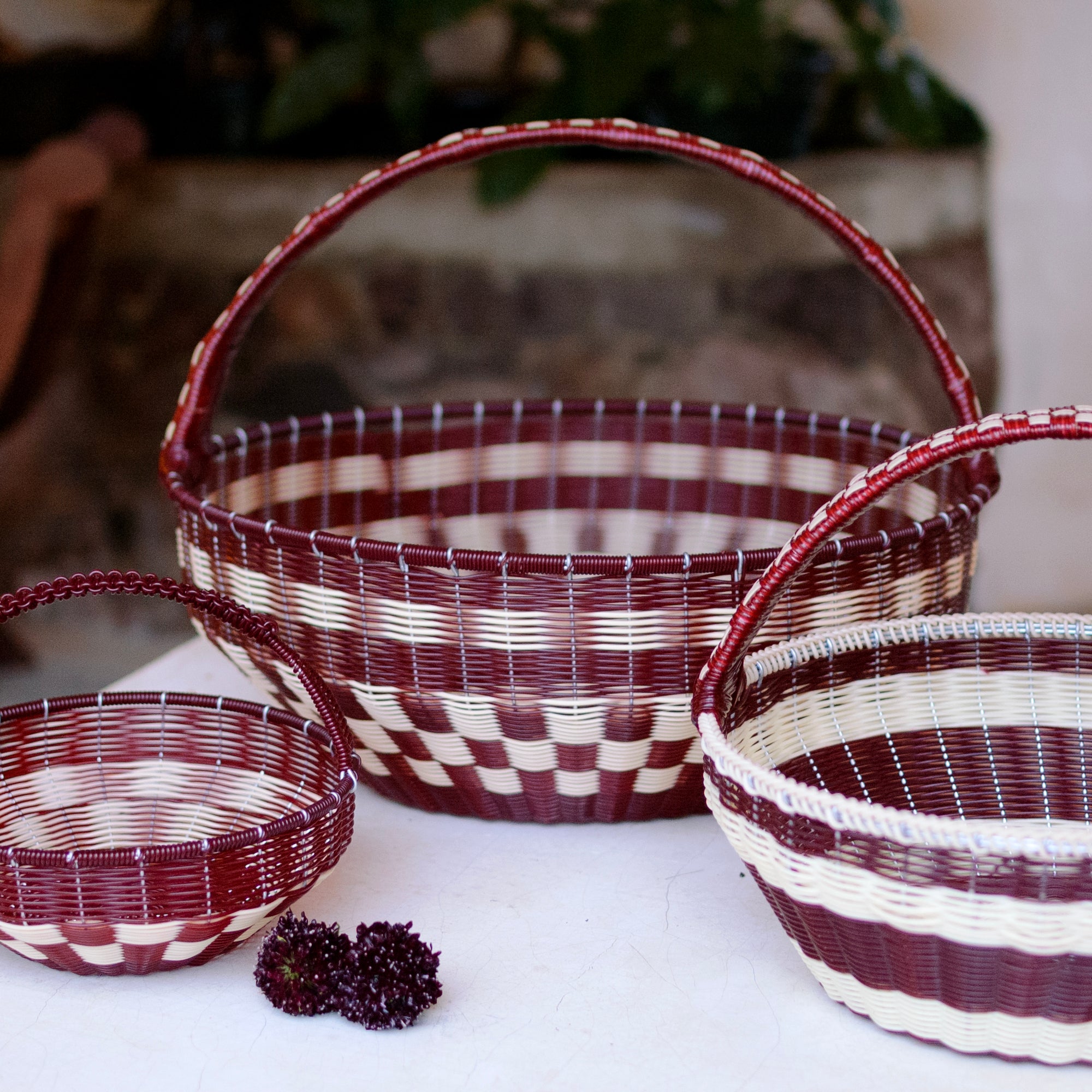
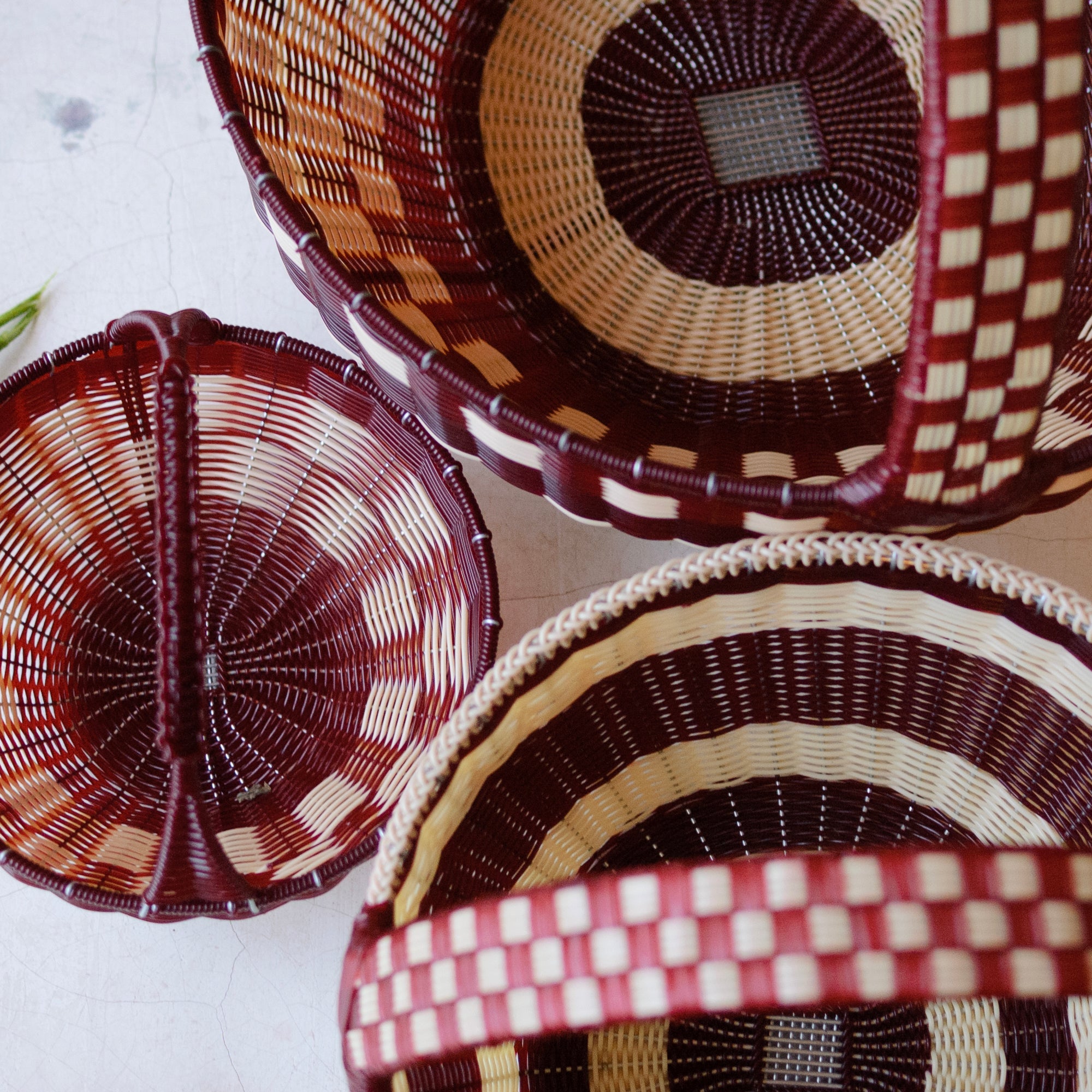
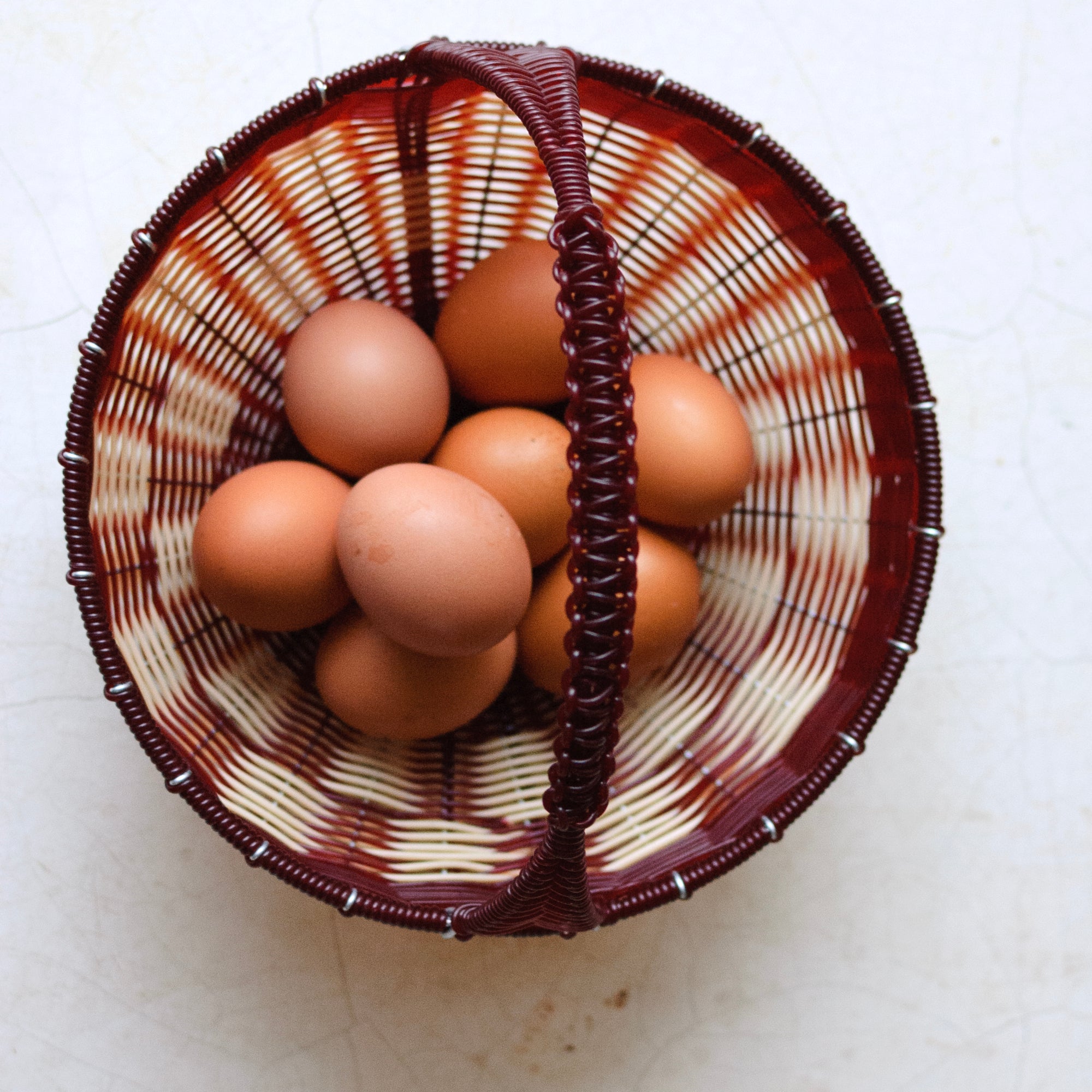
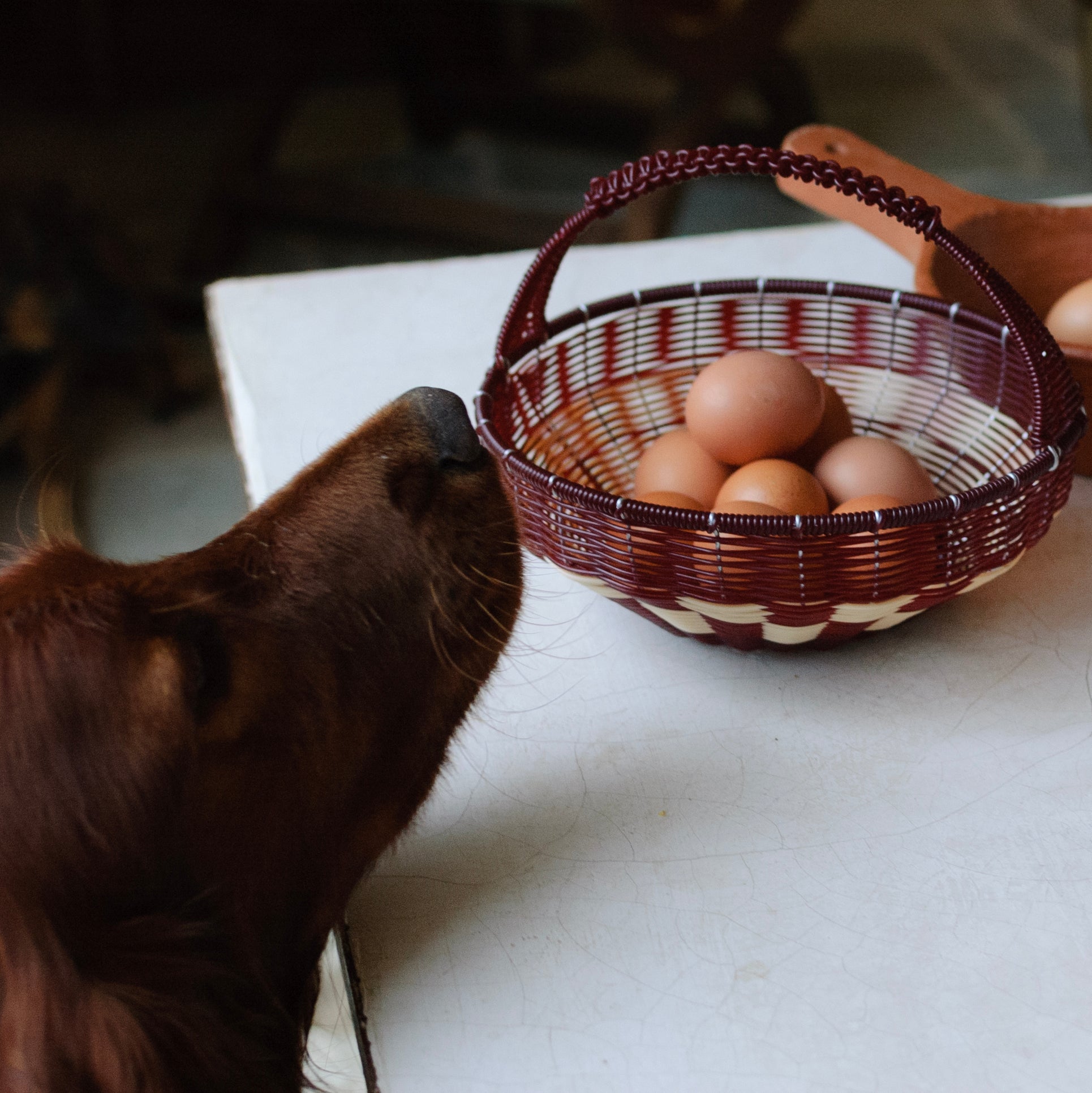
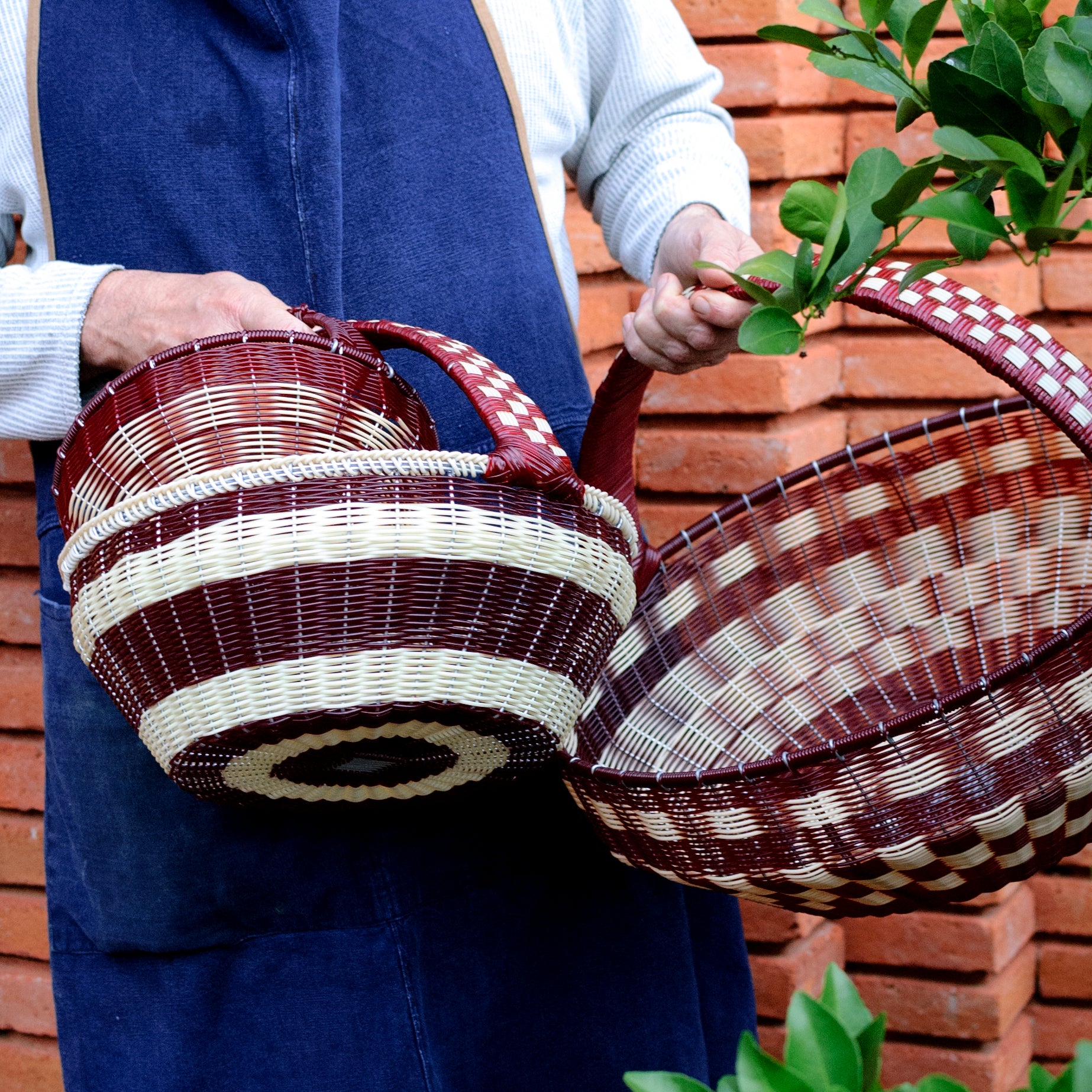
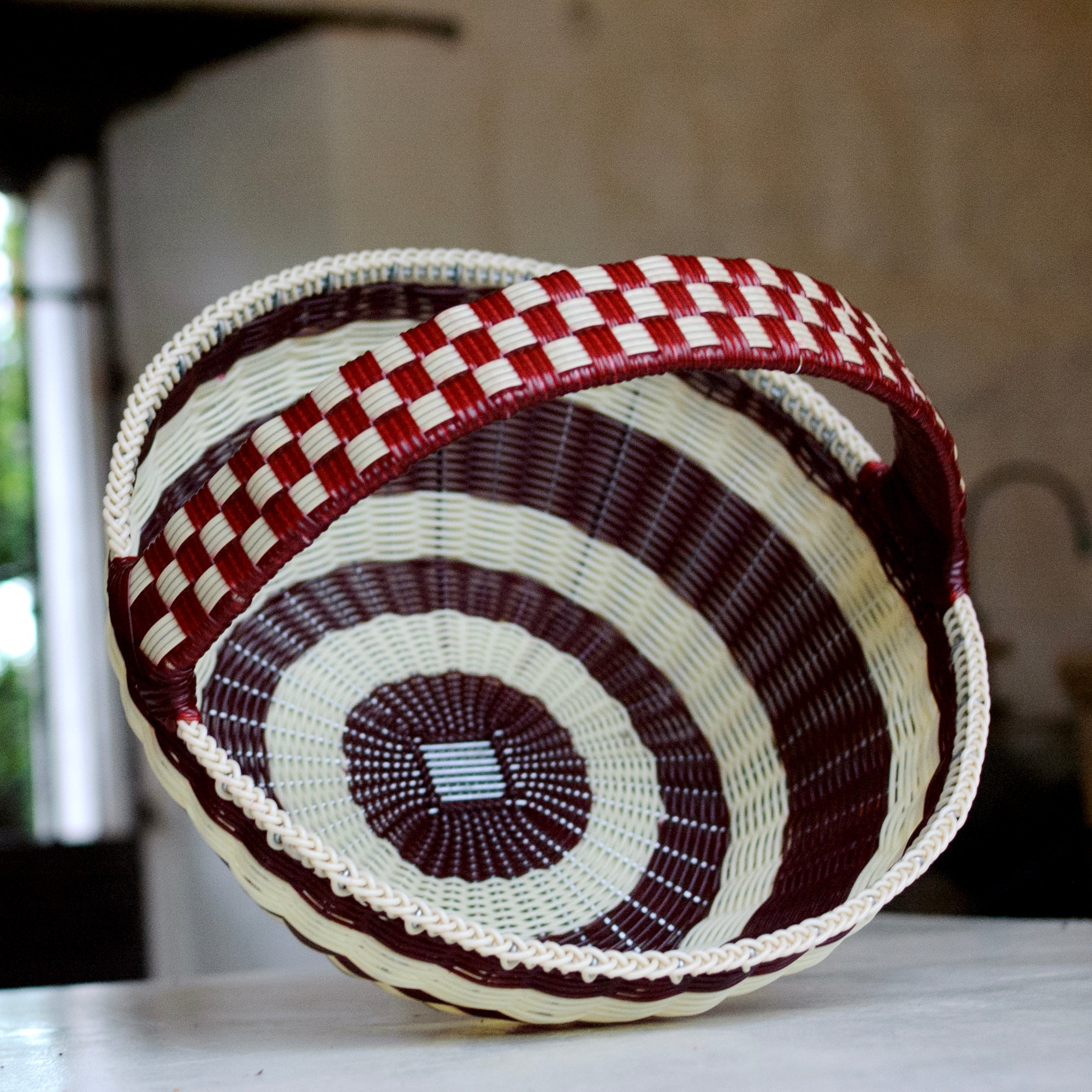
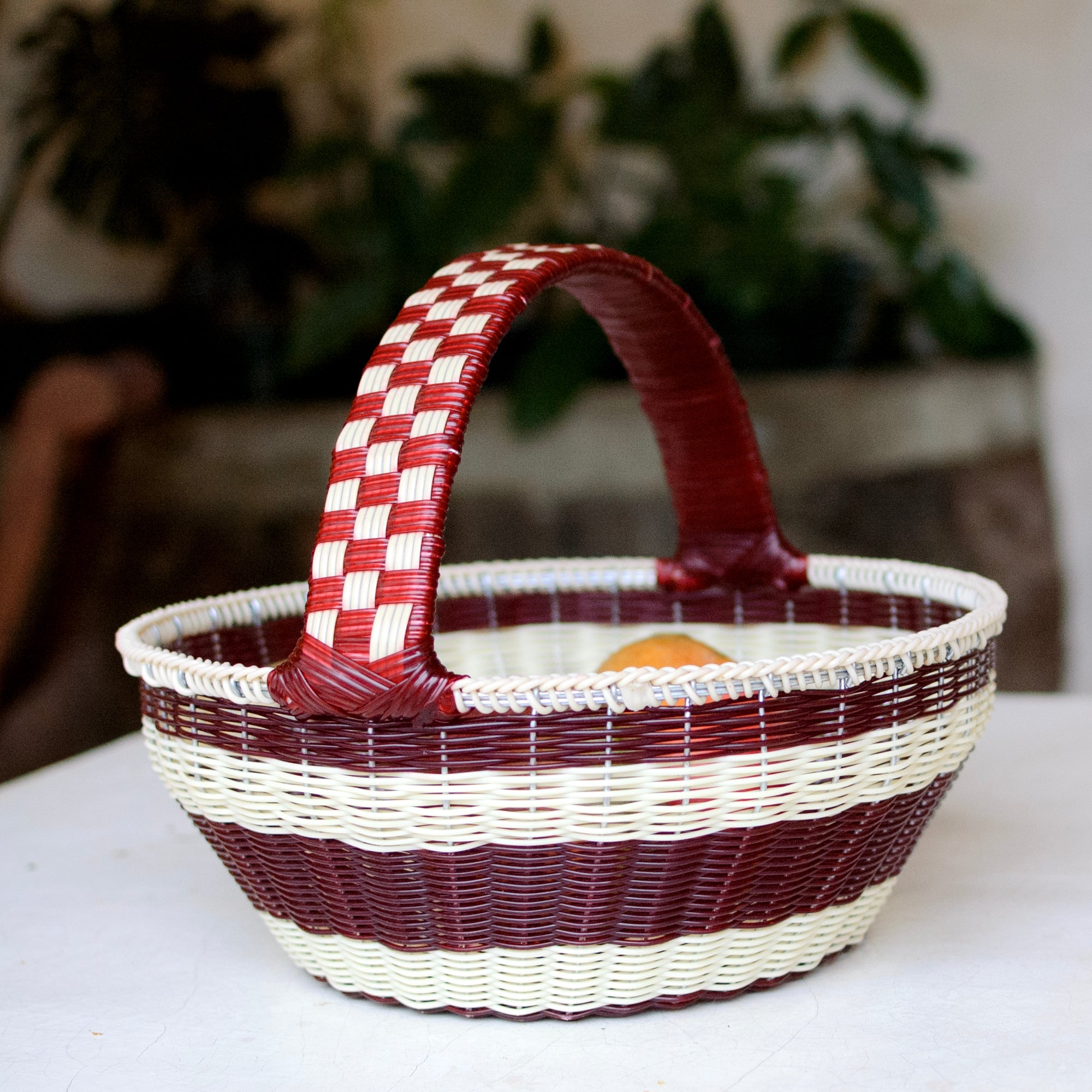
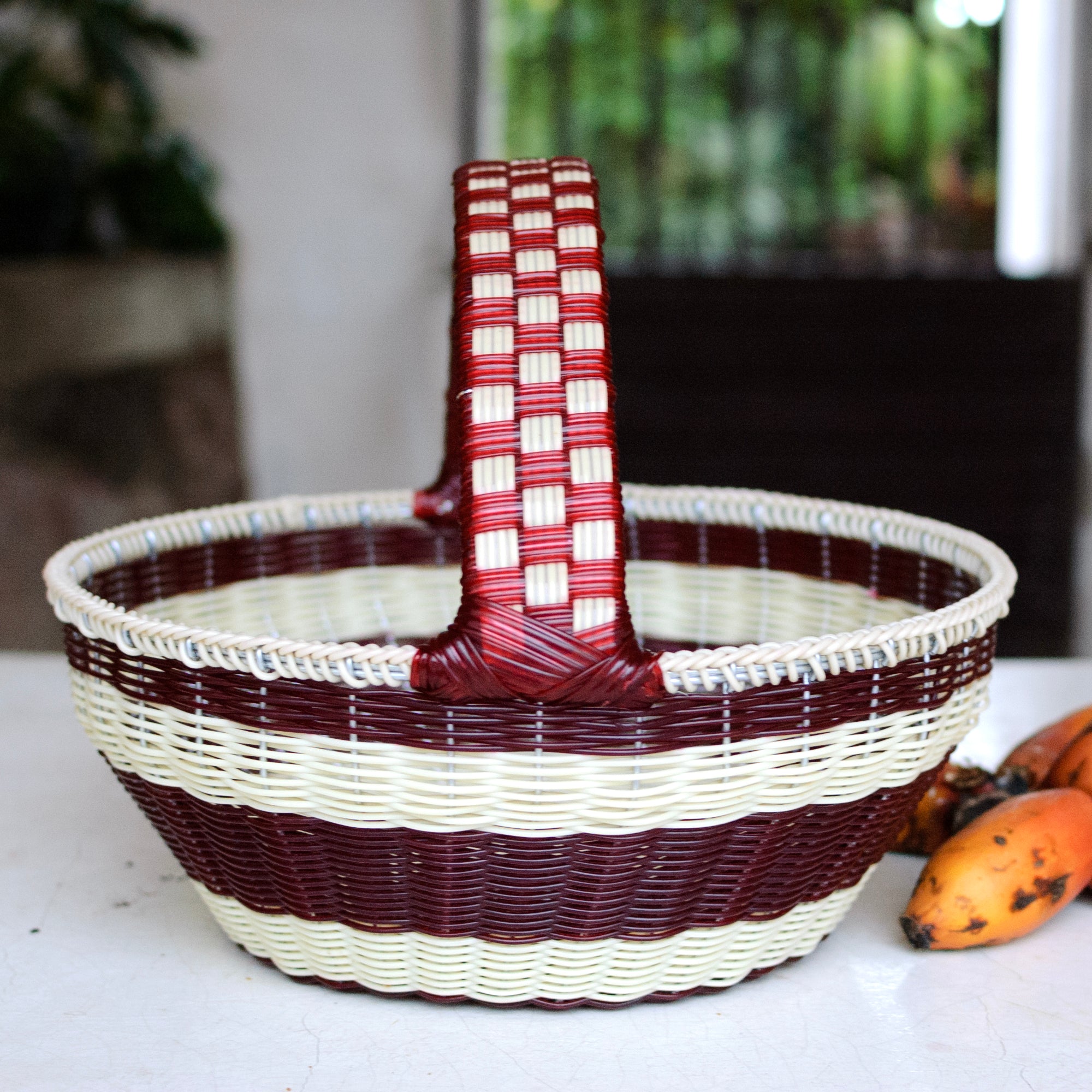
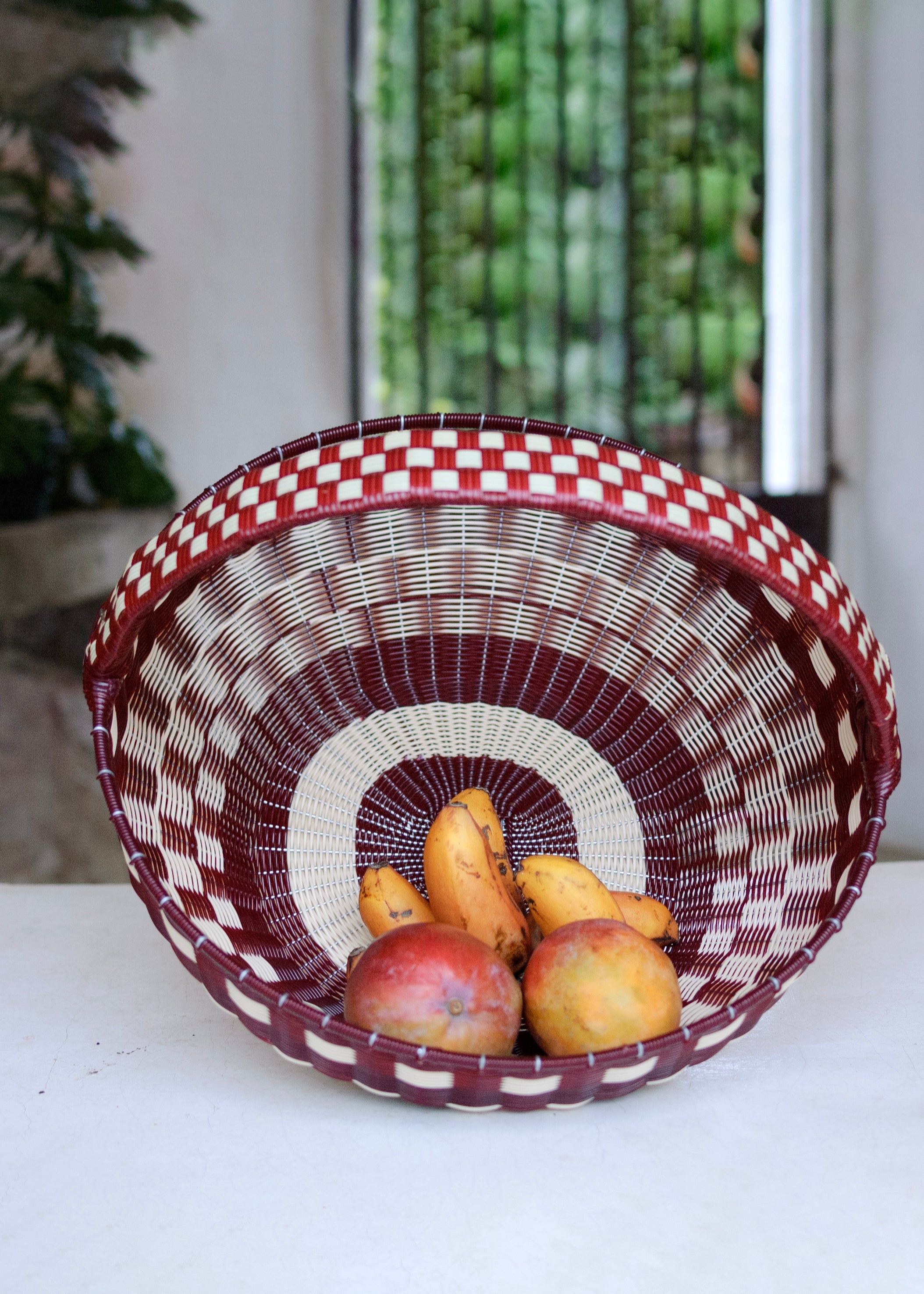
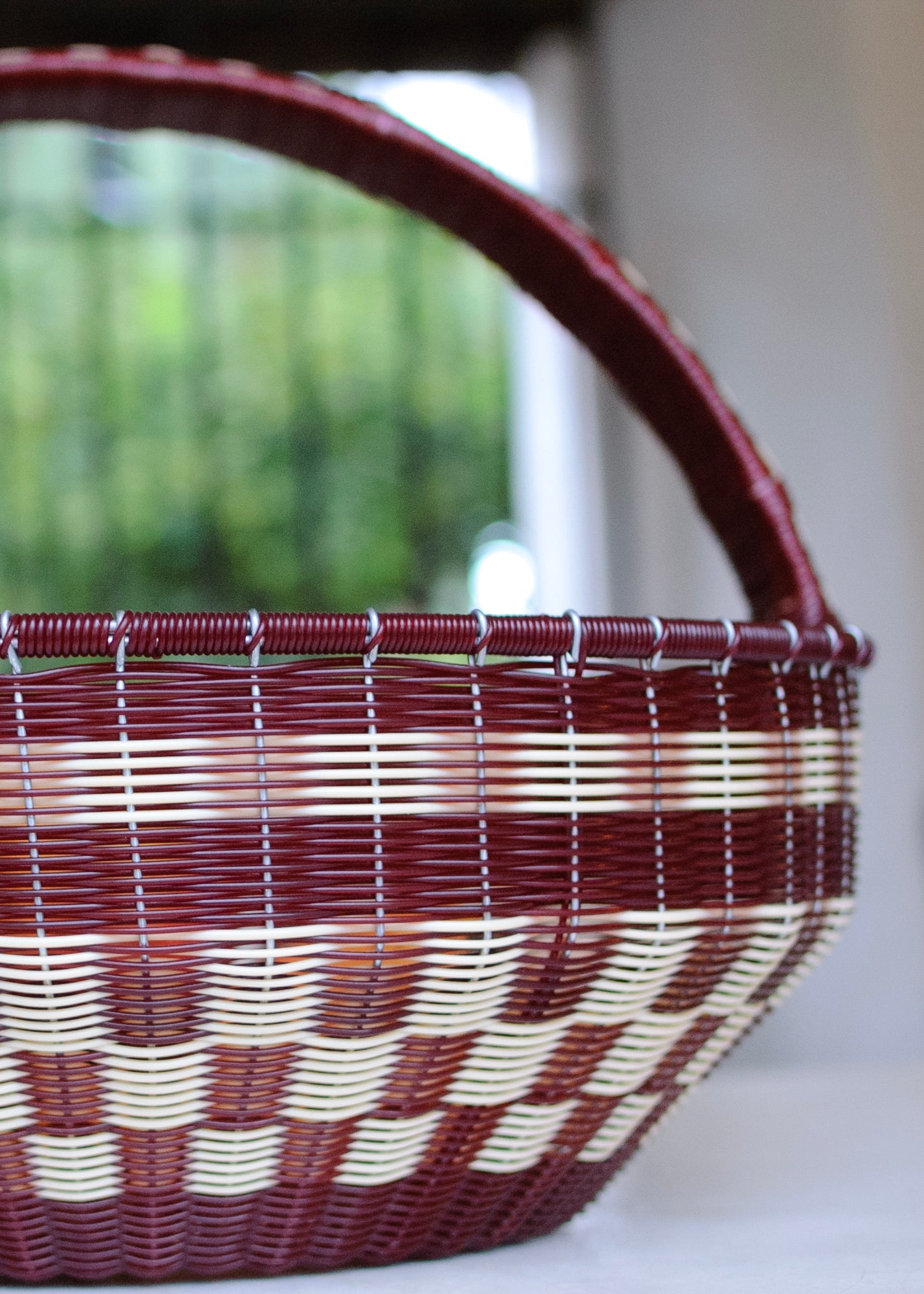
A small basket woven from ruby-red plastic cord over a wire frame, made for eggs, produce, and other everyday provisions. The material is modern, but the form belongs to Oaxaca's long tradition of useful basketry.
These baskets are made inside Oaxaca's prisons, where incarcerated men weave them as a way to support their families outside. The work is communal: the woman who brings them to the Tlacolula market sells baskets made not only by her husband, but by several men working together inside. Families collect the finished pieces on Fridays and bring them to market over the weekend. An ordinary household object shaped by necessity, each basket connects the men who make it, the families who carry it into the world, and the communities that continue to put it to use.
Dimensions
Care
Wipe clean with a damp cloth and a mild cleaner. Keep away from direct sunlight to preserve color and shape.
About Oaxaca
I arrived in Oaxaca unexpectedly twenty-six years ago, and it stole my heart. I have lived and worked there ever since, building Oax-i-fornia: a project that brings artisans, designers, and students together to create new work while learning from the knowledge already held within Oaxaca's communities. Set in the mountains of southern Mexico, Oaxaca remained relatively isolated from the country's industrial development well into the twentieth century. The Pan-American Highway reached the city in the 1940s, opening it more fully to tourism and the rest of Mexico. Long before that, its fertility and wealth were recognized by the Spanish Crown, which granted Hernán Cortés the title Marquis of the Valley of Oaxaca in 1529. Conquest transformed the region, but it did not erase its extraordinary diversity. Across Oaxaca, Indigenous communities retained languages, forms of local government, communal relationships to the land, and highly specific ways of making the objects required for daily life. This is why craft in Oaxaca is not simply a decorative tradition. In many communities, it remains part of the working infrastructure of the home. Metates still grind corn; molcajetes prepare sauces; comales cook tortillas much as they have for generations. Traditions are not static. Black clay, once used primarily for practical water vessels, became increasingly polished and ornamental during the twentieth century. New forms, markets, and collaborations continue to change what is made. Yet the knowledge behind these objects remains intensely local, rooted in particular soils, plants, tools, foods, and communities. Even today, Oaxaca continues to shape how I understand design: not as something imposed upon an object, but as knowledge accumulated through use.
About the Tlacolula Market
Every Sunday, Tlacolula becomes one of the oldest continuously operating markets in Mesoamerica. Its origins reach back to the pre-Hispanic trade networks of the Oaxaca Valley and to a system in which neighboring towns held their markets on different days, allowing vendors to carry food, pottery, textiles, tools, and household goods from community to community. But Tlacolula has never been only a place of commerce. Families travel from across the valley and from distant regions to trade, eat, exchange news, meet relatives, and maintain connections between communities. Multiple forms of Zapotec can still be heard alongside other Indigenous languages, while clothing, food, and objects often reveal exactly where their makers have come from. Tlacolula is not a market preserved for visitors. It is a living social and commercial system, one of the few places in Mexico where an ancient regional network remains visibly intact.
About Handmade Pieces
Crafted by hand using techniques passed down through generations of master artisans. Variations in color, texture, and finish are inherent to the process; each piece is, by nature, one of a kind.
Choose options